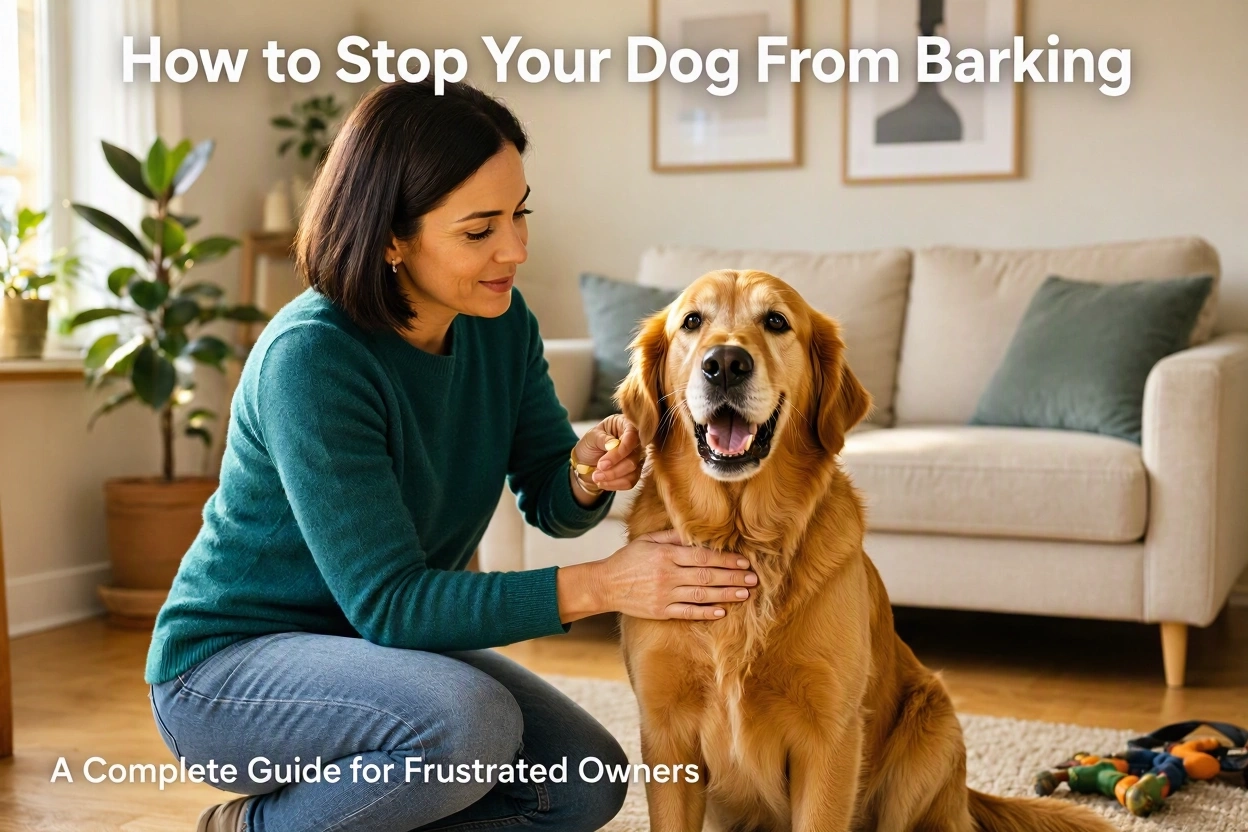
If you live with a dog, you already know that barking is a natural form of communication. But when excessive dog barking becomes a daily soundtrack — at the mailman, at the doorbell, at every squirrel outside the window — it can strain your patience, your relationship with your neighbors, and even your dog’s own wellbeing. The good news? Stopping your dog from barking is absolutely possible, and you don’t need harsh methods to do it.
In this guide, you’ll learn why dogs bark, how to identify the root cause of barking, and the most effective step-by-step techniques to train your dog to stop barking — for good.
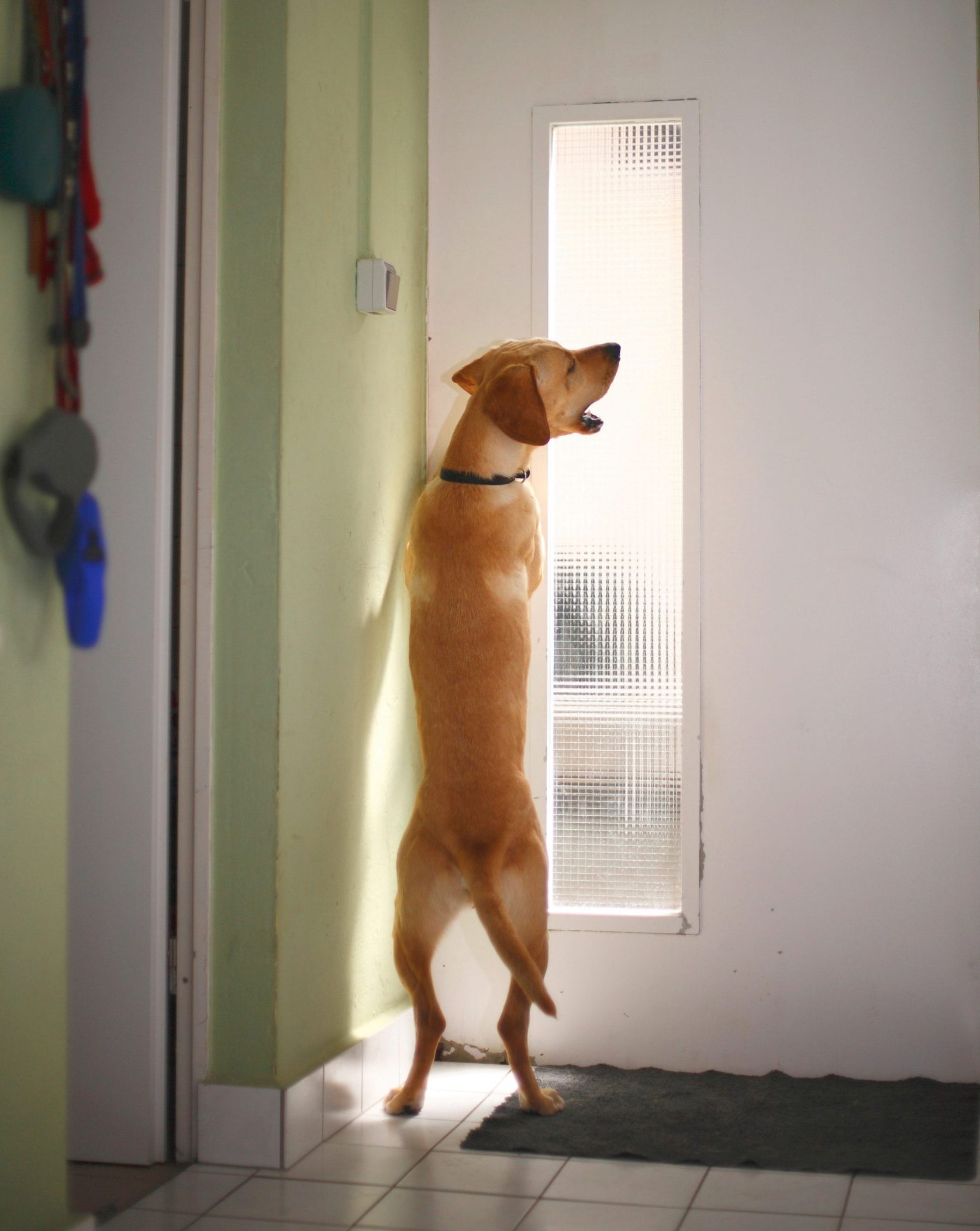
Why Do Dogs Bark? Understanding the Root Cause
Before you can stop your dog from barking, you need to understand why your dog is barking in the first place. Barking is never random — it’s always a response to something. Here are the most common triggers:
1. Alert or Territorial Barking
Dogs are hardwired to guard their territory. When someone approaches your door, walks past your fence, or delivers a package, your dog barks to say: “This is my home — stay back!” This is the most common type of excessive barking in household dogs.
2. Attention-Seeking Barking
If your dog has learned that barking makes you look, talk, touch, or feed them, congratulations — your dog has trained you. Attention-seeking barking is incredibly common and entirely learned behavior.
3. Boredom, Loneliness, or Lack of Exercise
A tired dog is a quiet dog. Dogs that don’t get enough physical exercise or mental stimulation often bark simply to release pent-up energy. This is especially true for high-energy breeds like Border Collies, Jack Russell Terriers, and German Shepherds.
4. Fear and Anxiety
Some dogs bark when they feel threatened or anxious. Separation anxiety barking — which happens when you leave the house — is a serious behavioral issue that requires a dedicated approach.
5. Excitement and Play
Not all barking is bad! Dogs often bark when they’re happy, during play, or when greeting you. The goal isn’t to eliminate barking entirely — it’s to control excessive barking and teach your dog when it’s appropriate.
Rule #1: Never Punish the Bark, Redirect It
One of the biggest mistakes owners make when trying to stop their dog from barking is shouting at the dog. To a dog, your yelling sounds exactly like barking — you’re essentially joining the chorus. Punishment also creates anxiety, and anxiety creates more barking.
Instead, every technique below follows one golden rule: ignore the unwanted behavior, reward the quiet behavior.

Technique #1: The “Quiet” Command — The Foundation of Bark Control
Teaching the “quiet” command is the single most powerful tool to stop a dog from barking. Here’s a proven step-by-step method:
-
Trigger the bark. Have someone knock on the door or ring the doorbell — whatever normally sets your dog off.
-
Let them bark a few times, then calmly say “Quiet” in a firm, low (not loud) voice.
-
The moment they stop barking, even for a second, immediately mark it with “Yes!” or a clicker, and give a high-value treat.
-
Repeat daily, gradually increasing the duration of silence before rewarding. Start with 2 seconds of quiet, then 5, then 10.
-
Practice in different contexts — at the window, in the yard, on walks.
Consistency is everything. Most dogs begin responding reliably within 2–3 weeks of daily practice.
🐾 Want a faster, more structured approach? If you’re struggling to implement these techniques on your own, a professional step-by-step training program can cut your learning curve dramatically. Discover the proven method thousands of owners use to stop barking in days — check it out here →
Technique #2: Desensitization — Remove the Trigger Power
Dogs bark at triggers because those triggers are novel or intense. Desensitization means gradually exposing your dog to the trigger at a low intensity until it becomes boring.
Example — the doorbell:
-
Play a doorbell sound on your phone at very low volume while your dog eats dinner.
-
Repeat daily, slowly raising the volume over two weeks.
-
Pair the sound with treats so the brain rewires: doorbell = good things, not threats.
Example — the window:
-
If your dog barks at passersby, apply a window film or frosted contact paper to the lower half of the glass.
-
Your dog can still see light and movement above, but the triggering sight of people walking by is removed.
-
Combine with teaching a “go to your place” command (see below).
This technique is incredibly effective for territorial and alert barking and works for dogs of all ages.
Technique #3: The “Place” Command — Give Your Dog a Job
A dog with a job has less time to bark. Teaching your dog to go to a designated mat or bed on command (“Place!”) redirects their energy into a calm, controlled behavior.
How to train it:
-
Stand near your dog’s bed and say “Place” while tossing a treat onto it.
-
When all four paws are on the bed, reward and praise.
-
Gradually add distance, duration, and distractions.
-
Once mastered, use it the moment your dog starts barking at the door or window: “Place!” → dog goes to bed → barking stops → reward.
This is the go-to technique used by professional trainers because it gives the dog an alternative behavior instead of just suppressing the bark.
Technique #4: Exercise and Mental Stimulation — The Quiet Dog Formula
This one isn’t optional. If your dog is barking out of boredom, no amount of command training will fix it. You must address the energy problem first.
Daily minimums by energy level:
| Energy Level | Physical Exercise | Mental Stimulation |
|---|
| Low (Bulldog, Basset) | 30–45 min walk | 10 min puzzle or sniffing |
| Medium (Lab, Beagle) | 60–90 min walk/play | 15–20 min training |
| High (Collie, Shepherd) | 2+ hours exercise | 30+ min of work/nose games |
Mental stimulation ideas:
-
Snuffle mats and food puzzles
-
“Find it” games hiding treats around the house
-
Short training sessions (5–10 minutes, twice a day)
-
Frozen Kongs stuffed with food
A dog that has worked its brain and body simply doesn’t have the fuel for hours of excessive barking.
Technique #5: Manage the Environment Like a Pro
Smart management prevents barking before it starts. Ask yourself: *”Can I simply remove the trigger?”
-
Block the view: Frosted window film, closing curtains, or strategic furniture placement.
-
White noise: A fan, radio, or white noise machine masks outdoor sounds that trigger barking.
-
Don’t leave your dog in the yard unsupervised: A bored, unsupervised dog in a fenced yard is a barking machine and a nuisance-barking lawsuit waiting to happen.
-
Redirect with toys: Keep a basket of engaging toys accessible. The moment barking starts, toss a toy in the opposite direction.
What About Anti-Bark Collars? An Honest Look
You’ll see countless products promising to stop dog barking instantly: citronella collars, ultrasonic devices, and shock collars. Here’s the honest truth:
-
Ultrasonic devices work on some dogs, and only at close range, but many dogs habituate to the sound within days.
-
Citronella collars can suppress barking but don’t address the cause — and some dogs find them highly stressful.
-
Shock collars carry real welfare risks: they can increase anxiety, cause fear-based aggression, and damage your relationship with your dog. Most certified behaviorists recommend against them.
The root cause of barking is behavioral — and behavior is always best fixed with training, not gadgets.
🐾 Ready for a real, lasting solution? If gadgets and guesswork haven’t worked, it’s time for a method developed by a professional trainer. See the exact system that stops barking fast — click here to learn more →
Special Case: Barking at the Doorbell and Visitors
Doorbell barking is the #1 complaint from dog owners. Here’s a complete protocol:
Phase 1 — Recondition the sound (Week 1–2): As described in the desensitization section, pair a recorded doorbell sound with treats at increasing volumes.
Phase 2 — Add the Place command (Week 3): Ring the actual doorbell. The moment it rings, cue “Place!” and guide your dog to their bed. Reward heavily when they settle.
Phase 3 — Real visitors (Week 4+):
-
Put your dog on a leash before opening the door.
-
Ask a friend to enter calmly, ignoring the dog.
-
Reward your dog for four paws on the floor and quiet.
-
If barking starts, lead the dog back to their place — no yelling, no drama.
Consistency between all family members is critical. If one person lets the dog jump and bark while another enforces the rules, the behavior will persist.
When to Call a Professional
Most excessive barking can be resolved with the techniques above within 4–8 weeks. But consult a certified professional (CPDT-KA or veterinary behaviorist) if:
-
Your dog’s barking is accompanied by destructive behavior, self-harm, or panic when left alone (possible separation anxiety)
-
Barking suddenly starts in an older dog (could indicate a medical issue like cognitive dysfunction or pain — always rule this out with a vet first)
-
You’ve been consistent for 2+ months with no improvement
-
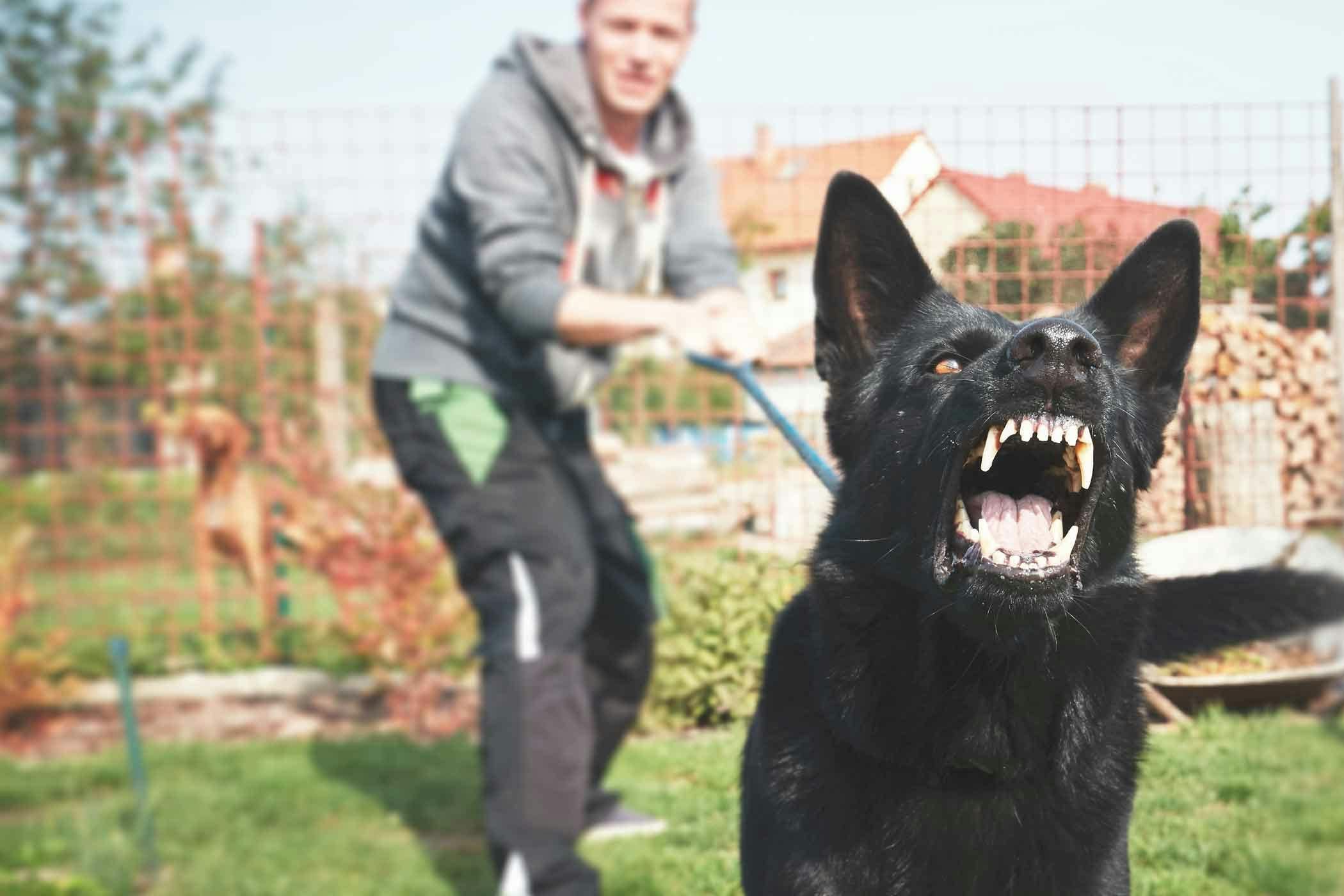
The barking includes aggressive body language (stiff posture, raised hackles, lunging)
Aggression-related barking is not a DIY project — a professional assessment keeps everyone safe.
Your 7-Day Quick-Start Action Plan
Ready to begin? Here’s your first week to stop your dog from barking:
-
Day 1: Identify your dog’s top 2 barking triggers. Write them down.
-
Day 2: Increase daily exercise by 30 minutes. Add one mental enrichment activity.
-
Day 3: Apply window film or close blinds to remove visual triggers.
-
Day 4: Start “Quiet” command training (5-minute sessions, 3x today).
-
Day 5: Introduce the “Place” command on the dog’s bed.
-
Day 6: Begin doorbell desensitization at low volume during meals.
-
Day 7: Combine Place + doorbell practice. Celebrate small wins!
The Bottom Line: A Quiet Dog Is a Trained, Tired, Understood Dog
Learning how to stop your dog from barking comes down to three pillars: understanding the cause, consistent training, and meeting your dog’s physical and mental needs. There is no overnight magic — but there is a proven path, and thousands of owners walk it successfully every month.
Your dog isn’t barking to annoy you. They’re communicating the only way they know how. Teach them a better way, and you’ll both be happier.
🐾 Don’t want to figure it all out alone? Get a complete, step-by-step, professional training system that shows you exactly what to do — in the right order — so your dog becomes calm and quiet, fast. Click here to see the method that’s helped thousands of owners →
Start today. Your neighbors — and your dog — will thank you. 🐶