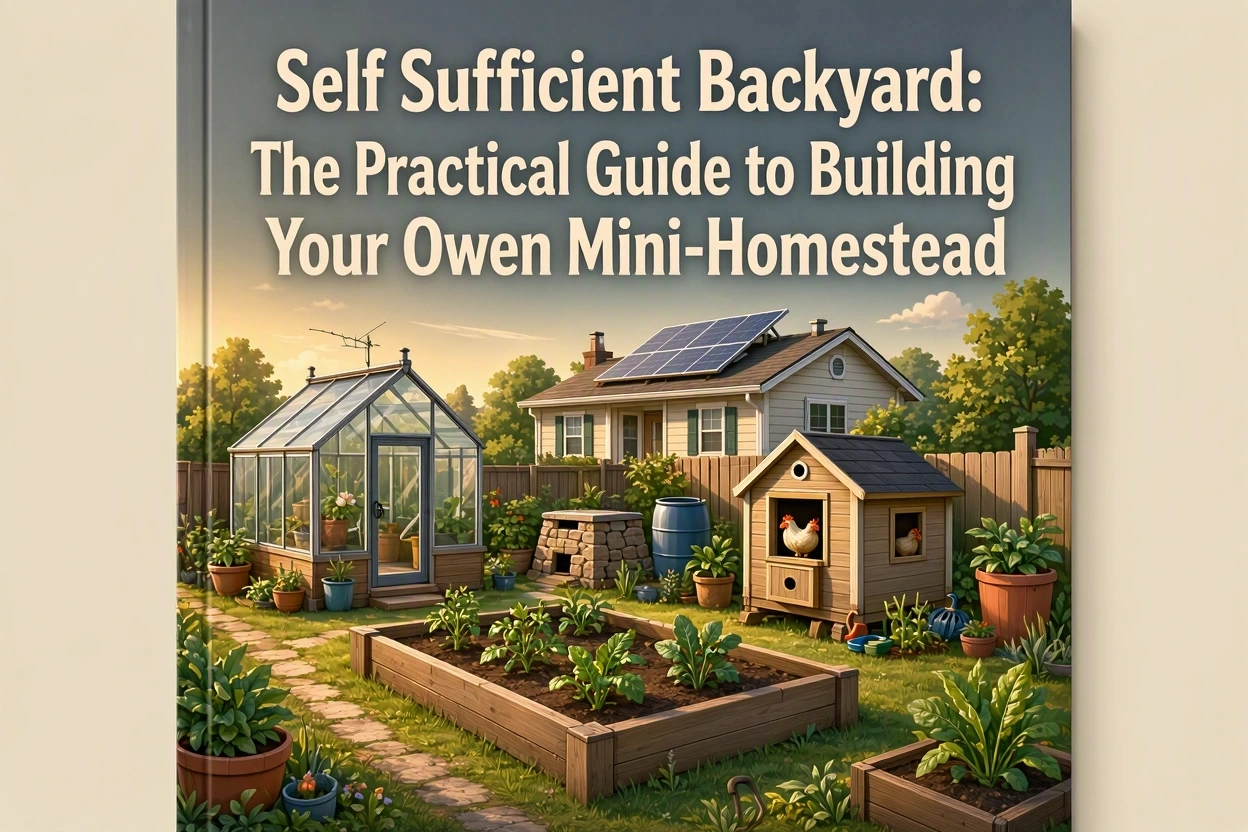
What if your backyard could pay for your groceries, protect your family during a crisis, and give you the freshest food on the planet — without ever leaving home?
That’s exactly what a self sufficient backyard delivers. And the best part? You don’t need a farm, a huge budget, or years of experience. In this guide, you’ll discover how everyday families are transforming ordinary yards into productive mini-homesteads — and how you can do it too.
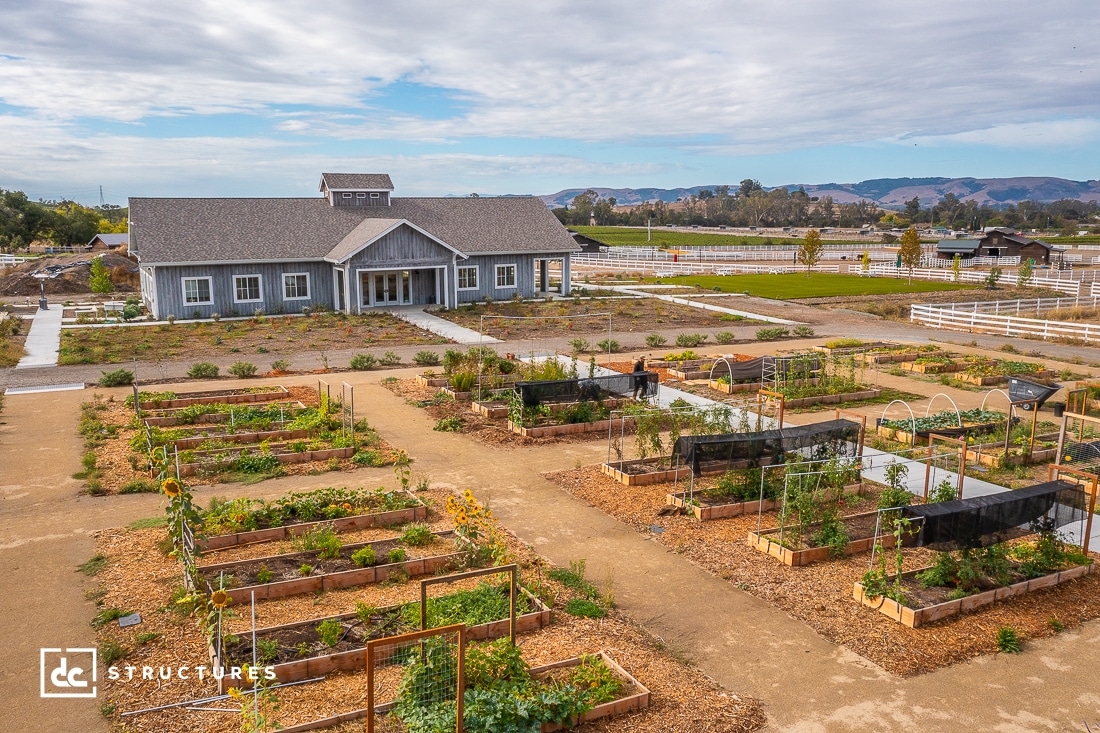
What Does “Self Sufficient Backyard” Really Mean?
A self sufficient backyard is an outdoor space designed to meet your family’s core needs: food, water, and energy. It’s the heart of modern homesteading, adapted for real life — whether you live in the suburbs, on a rural lot, or even in the city with a patio.
True backyard self sufficiency doesn’t mean going fully off-grid overnight. It means steadily reducing your dependence on external systems:
-
Growing a large share of your own fruits and vegetables
-
Harvesting and storing rainwater
-
Producing eggs (and eventually meat) from small livestock
-
Preserving harvests so they last all year
-
Generating at least part of your own energy
Think of it as stacking resilience, one project at a time.
Why 2026 Is the Perfect Year to Start
Three forces are converging right now, making the self sufficient backyard movement bigger than ever:
-
Food inflation — grocery bills have nearly doubled in five years for many families, and growing your own is the single most effective hedge.
-
Climate instability — heat waves, droughts, and storms are disrupting supply chains more frequently. A productive backyard buffers you against all of them.
-
Simplicity of modern methods — raised beds, automatic watering, and proven homesteading systems have made it easier than ever to succeed on the first try.
The families who start today will be the most prepared households on their block within two growing seasons.
Phase 1: Design Your Self Sufficient Backyard (Week 1–2)
Every successful self sufficient backyard starts with observation, not action. Spend a week watching your yard:
-
Sunlight: Which spots get 6+ hours of direct sun? That’s where your main garden goes.
-
Water flow: Where does rainwater pool or run off? That’s where barrels and swales belong.
-
Access: Which areas can you reach daily in 30 seconds? Reserve those for herbs, greens, and the chicken coop.
Sketch a simple zone map. Put daily-care elements (herbs, compost, chickens) closest to the back door, and low-maintenance perennials (fruit trees, berry bushes) further out. This permaculture principle saves you hundreds of hours per year.
Pro tip: Even a 500 sq ft yard can produce serious food with vertical growing and intensive planting. Space is rarely the limiting factor — planning is.
Phase 2: Build the Food Engine (Month 1–3)
Raised Beds: Your Highest-ROI Project
If you only do one thing, build raised beds. They are the foundation of every great self sufficient backyard garden because they give you control over soil, drainage, and weeds from day one.
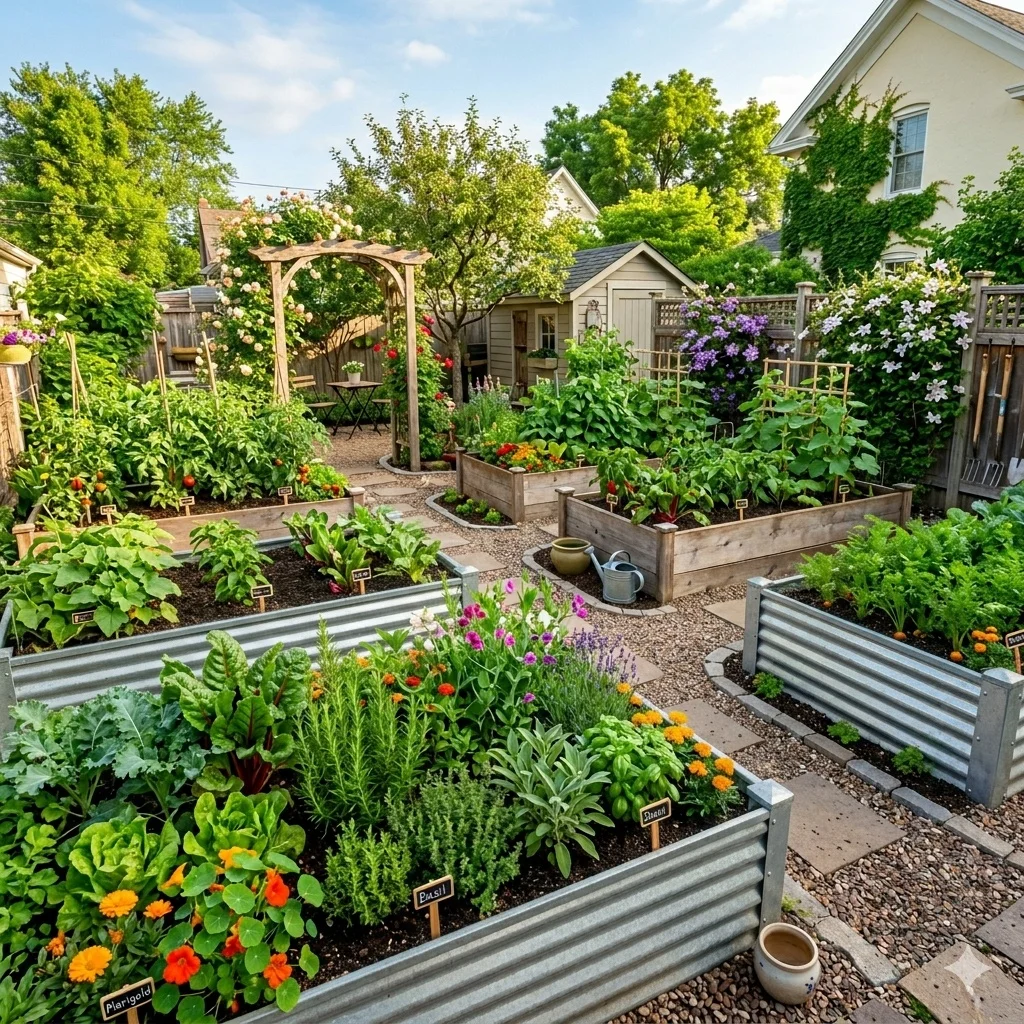
Start with two or three 4×8 ft beds. Fill them with a mix of quality topsoil and compost, then plant these beginner-friendly, high-yield crops:
-
Tomatoes — the king of the backyard garden; one plant can yield 20+ lbs
-
Zucchini — famously prolific; two plants feed a family all summer
-
Bush beans — fast, nitrogen-fixing, and they keep producing for weeks
-
Lettuce & spinach — ready in 30–45 days, perfect for succession planting
-
Kale & chard — nearly indestructible, harvest leaves for months
Then add calorie crops — potatoes, sweet potatoes, and winter squash. These are what turn a salad garden into a genuine self sufficient backyard that can genuinely feed people.
Perennials: Plant Once, Harvest for Decades
Annuals are your sprint; perennials are your marathon. Every square foot of a smart backyard homestead includes plants that come back on their own:
-
Fruit trees (dwarf varieties fit even small yards)
-
Raspberry and blackberry canes along fences
-
Blueberry bushes in acidic soil pockets
-
Asparagus, rhubarb, and perennial herbs like rosemary and thyme
Within three years, perennials will produce food with almost zero labor — the true engine of backyard self sufficiency.
Phase 3: Secure Your Water Supply (Month 2–4)
Here’s a statistic most people don’t know: one inch of rain on a 1,000 sq ft roof collects over 600 gallons of water. An average home sheds tens of thousands of gallons every year — and most families let every drop run down the storm drain.
Your self sufficient backyard should capture that free resource.
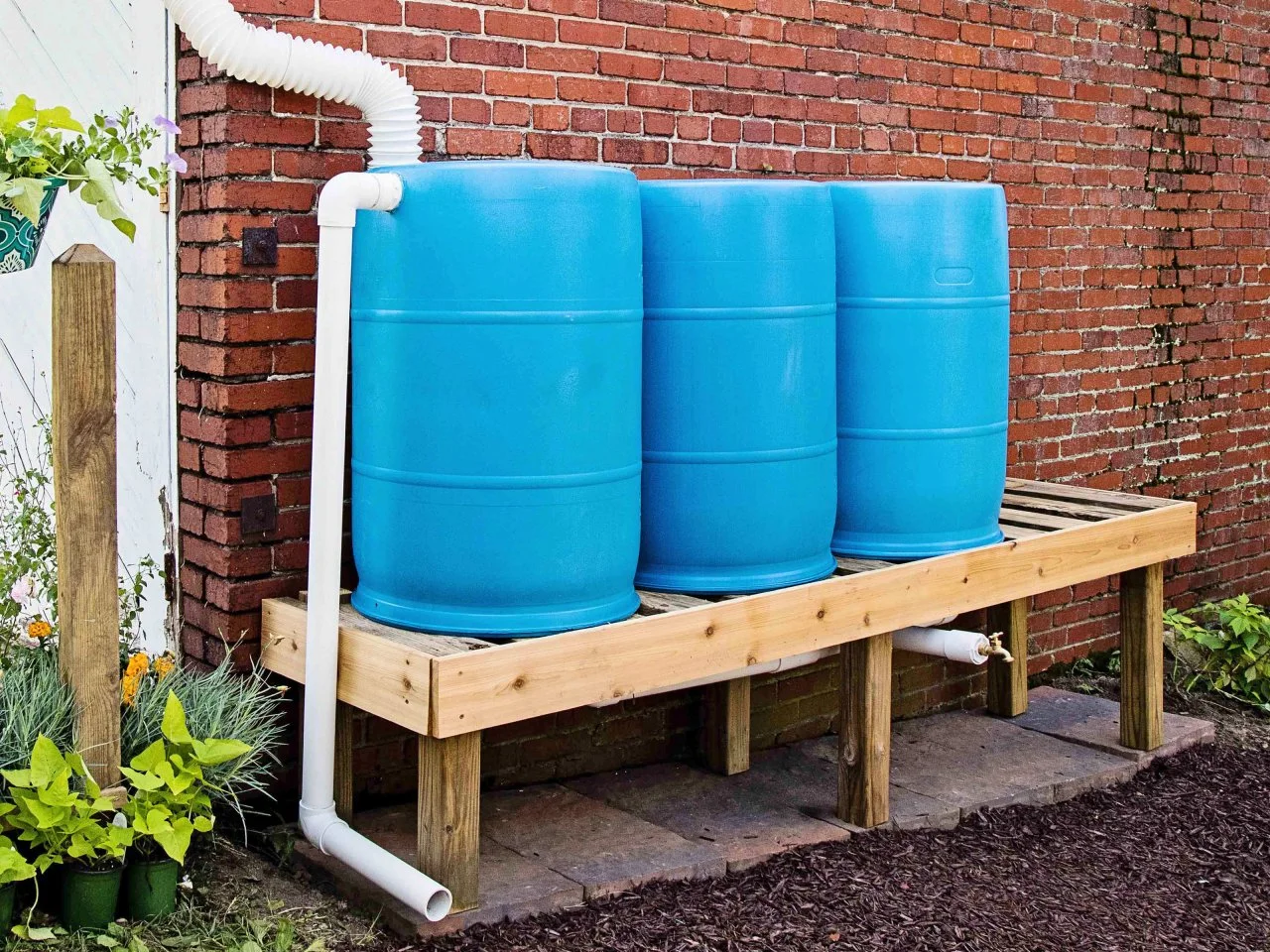
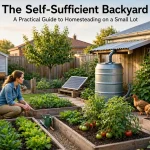
A basic rainwater system takes one weekend:
-
Place a 55-gallon food-grade barrel under each downspout
-
Connect barrels with overflow hoses so the system fills sequentially
-
Attach a spigot and gravity-feed a soaker hose into your raised beds
This single upgrade makes your backyard homestead dramatically more drought-resistant, cuts your water bill, and ensures your garden survives even when municipal restrictions kick in.
Phase 4: Add Small Livestock (Month 3–6)
Once your garden is running, it’s time for the most satisfying upgrade of all: backyard chickens.
Three to five laying hens will provide your family with 15–25 fresh eggs per week, devour your kitchen scraps, and generate manure that supercharges your compost. Chickens are the single fastest way to make your self sufficient backyard nutritionally complete — eggs deliver protein and fat that gardens alone can’t.
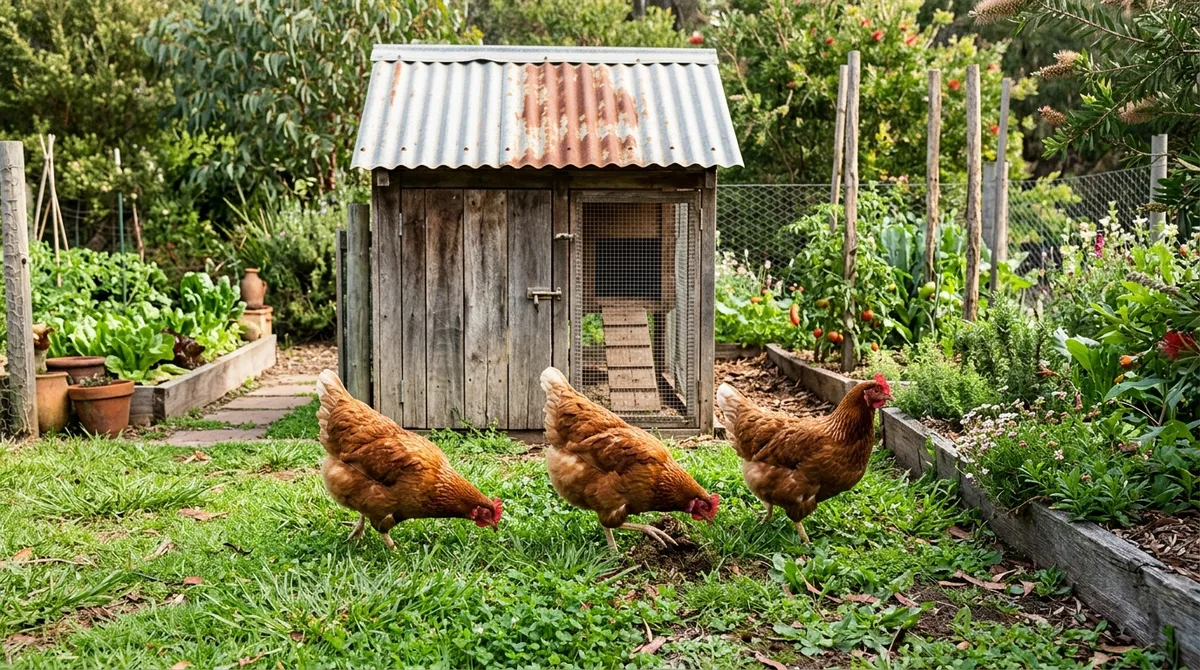
Most suburban municipalities allow 4–6 hens (roosters usually prohibited). A compact coop with a secure run fits in a corner of even a modest yard. Check your local ordinances, pick a beginner-friendly breed like Rhode Island Reds or Australorps, and you’ll be collecting warm eggs by next season.
Other small livestock to consider as you grow:
-
Quail — eggs in just 6 weeks; ideal for tiny urban lots
-
Rabbits — quiet, compact, and one of the most efficient meat sources on earth
-
Honeybees — pollinate your entire garden while producing honey and wax
Phase 5: Preserve the Harvest (Ongoing)
Growing food is half the battle; keeping it is the other half. A true self sufficient backyard feeds you in January as well as July. Master four preservation methods:
-
Water-bath canning — tomatoes, jams, pickles, sauces
-
Freezing — berries, blanched veggies, herbs in oil
-
Dehydrating — apples, peppers, herbs, fruit leathers
-
Cold storage — potatoes, carrots, onions, squash in a cool dark space
A family with a 1,000 sq ft garden plus chickens and good preservation habits can cover 50–70% of their annual food needs. That’s not a hobby — that’s real backyard self sufficiency.
Phase 6: Energy Independence (Year 2+)
The final layer of a complete self sufficient backyard is power. You don’t need to rip your home off the grid — start small:
-
A small solar setup for the shed, greenhouse fans, or garden irrigation pump
-
Solar ovens and rocket stoves for free outdoor cooking
-
A gravity-fed or hand-pump backup for your water system
Each kilowatt you produce is money in your pocket and one less thing that can fail when you need it most.
The 5 Mistakes That Kill Most Beginner Homesteads
-
Starting too big — five beds and ten chickens in month one leads to burnout. Start with one bed and three hens.
-
Ignoring the soil — feed the soil first (compost, mulch, cover crops), and the soil feeds you.
-
No water plan — gardens die in August without irrigation. Barrels go in before planting.
-
Growing only salad — leafy greens are great, but calories (potatoes, squash, beans) are what sustain a family.
-
No preservation plan — an unpreserved harvest rots. Learn canning and freezing before your first big glut.
How Fast Can You Really Get There?
Here’s an honest timeline for building a self sufficient backyard:
| Milestone | Timeline |
|---|
| First harvests (salads, herbs) | 6–8 weeks |
| Steady vegetable supply | 1 growing season |
| Eggs every week | ~6 months after getting chicks |
| 50%+ of family vegetables | 2 seasons |
| Water + food + partial energy independence | 2–3 years |
Thousands of families have walked this exact path. The difference between them and everyone else? They followed a proven system instead of guessing.
Inside, you’ll find the exact layouts, crop plans, water system designs, and money-saving shortcuts that cut years off the learning curve — including how one family produces most of their food on just 1/10th of an acre.
FAQ: Self Sufficient Backyard Questions, Answered
How much does a self sufficient backyard cost to start? A starter setup — 2 raised beds, 3 hens, 2 rain barrels — runs $300–$800 and typically pays for itself within the first growing season through grocery savings.
Do I need a big yard? No. With intensive methods, a productive backyard homestead fits in 400–1,000 sq ft. Vertical growing, containers, and dwarf trees multiply every square foot.
Is it legal to have chickens and a garden in the suburbs? In most areas, yes — front-yard and backyard gardens are widely protected, and most towns allow 3–8 hens. Always confirm local ordinances and HOA rules first.
How much time does it take per week? A well-designed self sufficient backyard needs 5–10 hours a week — less time than most people spend grocery shopping and mowing a useless lawn.
Can a beginner really do this? Absolutely. Every expert homesteader planted their first seed with zero experience. With a step-by-step plan, beginners routinely outperform trial-and-error gardeners.
Your Backyard Is Waiting
Every day you wait is another season of groceries bought instead of grown. The families who are eating from their own land this time next year are the ones who planted their first bed this month — not the ones who kept “meaning to start.”
The good news: you don’t have to figure it out alone. The complete roadmap already exists.
One year from today, you could be collecting eggs at sunrise, picking dinner from your own raised beds, and watching your water bill shrink — all a few steps from your back door. The only thing standing between you and that life is the decision to begin.